




























By Ella O., Nutrition Advisor
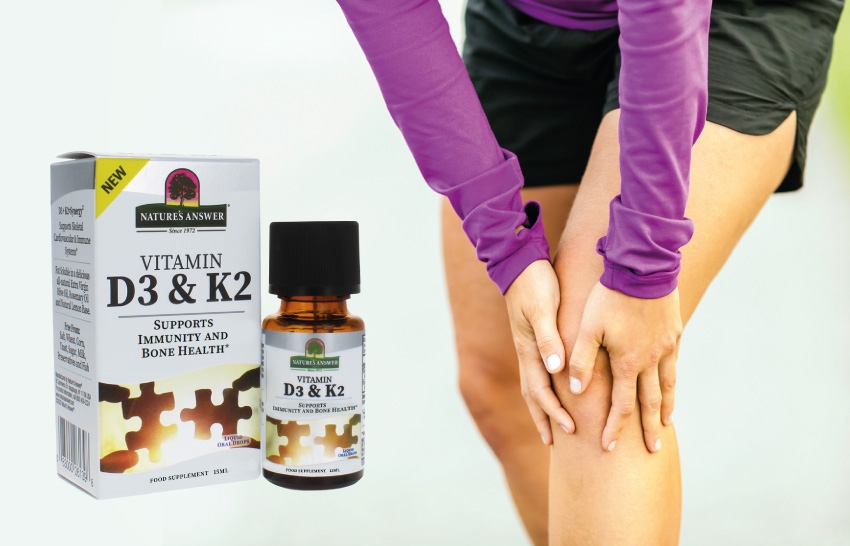
Nature’s Answer brings you NEW Vitamin D3 & K2 liquid drops. Each two drops serving supplies you with a balanced dosage of 1000iu (25mcg) of Vitamin D3 with 120mcg of Vitamin K2. Vitamin D3 is in its biologically active form – cholecalciferol, and extra virgin olive oil has been added to the formula, to support the assimilation of these fat-soluble nutrients. The liquid drops provide efficient and fast absorption, to help you meet your Vitamin D & K2 requirements. At an impressive 250 servings, this little bottle goes a long way!
Formulated by a team of experts at Nature’s Answer, these holistically balanced nutrients are delivered in an all-natural base of extra virgin olive oil, rosemary extract and a hint of natural lemon oil flavour.
Nature’s Answer Vitamin D3 & K2 is gluten free, suitable for vegetarians and free from common allergens such as milk and corn. It contains absolutely no artificial preservatives, sugars or sweeteners.
Nature’s Answer is family owned and operated – and has a proud tradition of providing the highest quality and purity of ingredients in every product since 1972!
Read on to learn more about these vital vitamins*
Healthy Bones: Vitamin D & K2:
We know that dietary calcium plays an important role in maintaining healthy bones, but so does having adequate amounts of Vitamin D and Vitamin K2. A healthy balanced diet that contains all these elements can go a long way to help support a reduction in onset or worsening of low bone density and symptoms of osteoporosis.
Vitamin D3 & K2 = Synergy
This is where the synergistic partnership of Vitamin D3 and Vitamin K2 comes into play: Vitamin D3 contributes to absorption of calcium and Vitamin K2 assists transporting this calcium into the bones and away from the soft tissues and arteries. Taking K2 alongside D3 may be useful for those wanting to support the health of their bones.
Vitamin D3: Deficiency risk factors:
There has been a lot of interest in Vitamin D3 within this last year, which is not surprising considering its important role within the immune system. Public Health England has identified an increase in reported cases of Vitamin D deficiency. They recommend that everyone supplement their diet with Vitamin D between the months of October and March. They also emphasize that individuals at a higher risk of deficiency can take a supplement all year round – i.e., during the summer months too! Those who risk deficiency in essential Vitamin D include individuals with limited sun exposure, people with dark skin, and individuals with certain conditions that involve malabsorption of nutrients from food**.
It is estimated that just 10 % of our Vitamin D can be sourced from food, the remaining 90% must be obtained via exposure to the sun or Vitamin D supplementation. Vitamin D is found in fish, dairy and eggs, and may be low in a plant-based or restricted diet.
Sunshine Vitamin – are we getting enough?
Referred to as the ‘Sunshine Vitamin’, Vitamin D is produced naturally by the body following exposure to sunlight (only from March to October – the UVB light is too weak in the UK for the rest of the year). It is thought that approximately 30 minutes is needed to activate production -depending on variables such as where we live, the time of the day and the skin type we have, as well as how much skin we have exposed to the sun. During the summertime we may need to balance getting enough vitamin D from sunlight with protecting our skin from the harmful effects of the sun. Sitting indoors by a sunny window will not benefit our Vitamin D levels, this is because ultraviolet B (UVB) rays are blocked through the glass. Those at a greater risk of Vitamin D deficiency, who hence may benefit from supplementation, could include individuals who spend most of the day indoors, as well as those who choose to cover up due to sensitive skin or cultural traditions.
Overview of Vitamin D3 benefits:
Vitamin D contributes to the functioning of the immune system, so it may help to improve our resistance against infections and certain diseases. It also contributes to the absorption and utilisation of calcium and phosphorus, hence it plays a vital role in the maintenance of our bones and the health of our normal teeth. Vitamin D receptors have been identified in nearly all the tissue types throughout the body. It has an important role to play in the process of cell division and contributes to the maintenance of normal muscle function. Latest research also shows a link between Vitamin D levels and emotional wellbeing.
Vitamin K2 Discovery:
For most of the last century, the only information available regarding Vitamin K was about its role in normal blood clotting. However more recent discoveries have found that Vitamin K2 operates quite differently in the body compared to Vitamin K1.
Unlike Vitamin K1, Vitamin K2 (menaquinone) is required for calcium metabolism. Research shows that it does this by working as a co-factor to activate proteins (enzymes) known as osteocalcin and MGP. Osteocalcin takes calcium into the bones, MGP escorts the calcium out of the soft tissues and arteries. As such, emerging research links Vitamin K2 with the healthy function of the cardiovascular system, as well as bone health.
Vitamin K2 is found in animal-derived foods, such as grass-fed meat, raw or fermented cheeses and egg yokes. It is also produced within the intestinal microbiome. Plant based diets may be lower in Vitamin K2 (unless fermented Natto is consumed regularly!).
*For informational purposes only. Any claims mentioned in this blog are based on research and are not aimed to diagnose, treat, cure or prevent any disease. Food supplements should be used within the framework of a healthy lifestyle and not used as substitutes of a varied and balanced diet.
** For more information and regular updates, visit Public Health England’s official website.