

























By Ella O., Nutrition Advisor
Discover our nutrition tips and curated product suggestions for eczema prone skin*.
Eczema is a skin condition that can affect people of all ages - according to the National Eczema Society the most common form; atopic eczema (also known as atopic dermatitis) affects 1 in 10 adults and 1 in 5 children in the UK. Atopic eczema can present itself as very dry and sometimes unbearably itchy skin. In a flare-up the skin can become very red, weepy and inflamed.
Atopic eczema can run in families, this type of eczema is thought to be due to a genetically defective skin barrier, where the skin does not produce enough natural oils and is unable to retain moisture. Eczema can flare up when people are under emotional or psychological stress- it doesn’t help that the condition itself can be extremely stressful!
Identify Triggers
Those with eczema can benefit from identifying and avoiding things that trigger a flare, these could be airborne allergens such as pollen, pet hair or house-dust mite, or contact allergens such as cleaning products. Food triggers differ from person to person, culprits may include cow’s dairy products, eggs, refined sugar, nuts, citrus or wheat.
Boost Essential Fatty Acids
 Clinical research studies have shown improvements in eczema in relation to increased intake of essential fatty acids (EFAs). Positive results have been observed in those supplementing with evening primrose oil (EPO) including a significant reduction in skin dryness, itch and inflammation (1).
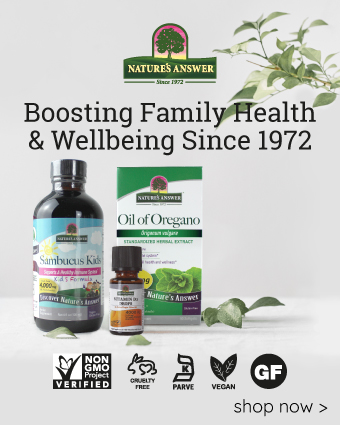
Nature’s Answer Evening Primrose oil offers a highly absorbable form of essential fatty acids. Each serving offers 2,000 mg of Evening Primrose oil, which is naturally rich in gamma linolenic acid (GLA). Formulated with Quik-Sorb®, a proprietary blend of herbs (Amla fruit, Capsicum fruit and Ginger rhizome) known to enhance the delivery of nutrients to the body.
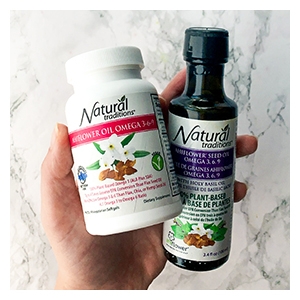
Natural Traditions Ahiflower seed oil and capsules is an excellent source of gamma-linolenic acid (GLA) and provides an ideal vegan, plant-based form of omega-3 for optimal bioavailability and conversion to EPA (eicosapentaenoic acid).
It has been shown that Omega 3 essential fatty acids have natural anti-inflammatory properties and may benefit those wanting to improve inflammatory skin conditions through their diet (2). Nature’s Answer Omega 3 Fish Oil provides incredible doses of essential fatty acids EPA and DHA, and interestingly, Nature’s Answer Omega 3 Black Seed Oil is a clinically proven supplement shown to be 2.9x more effective in supporting a natural inflammation response than Omega-3 fish oil alone.
Vitamins and Microbiome
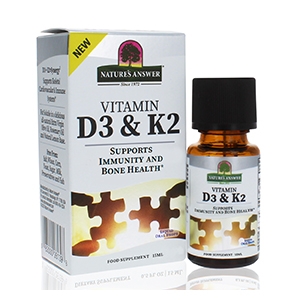 Research has looked into the potentially significant role Vitamin D has to play in improving eczema symptoms (3). We know that Vitamin D is involved in many processes in the body including immunological. Supplementation of Vitamin D has been officially recommended for all in the UK between the months of October and March. In an all-natural base of virgin olive oil, Nature’s Answer Vitamin D3 drops and Nature’s Answer Vitamin D3 & K2 drops provide pure and potent forms of this vital nutrient.
Optimising the diet and gut microbiome may be helpful. For a personalised approach, a nutritional therapist or registered naturopath can support the customer with a plan and assist them in identifying potential food triggers.
Skincare routine
 A good skincare routine is an essential for eczema. It is important to avoid body care products that contain harsh chemicals and potential irritants such as parabens, SLS and phthalates.
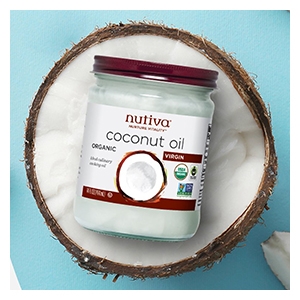
It has been clinically shown that, by supporting the healing of the skin barrier, the topical use of virgin coconut oil can exert positive benefits for those with mild to moderate atopic dermatitis. Unrefined and cold-pressed, Nutiva Organic Virgin Coconut Oil is ideal for skincare as well as a variety of culinary uses.
*The claims are based on clinical research, are not aimed to diagnose, treat, cure or prevent any disease. Food supplements should be used within the framework of a healthy lifestyle and not used as substitutes of a varied and balanced diet.
References:
(1). Schalin-Karrila M, Mattila L, Jansen CT, Uotila P. Evening primrose oil in the treatment of atopic eczema: effect on clinical status, plasma phospholipid fatty acids and circulating blood prostaglandins. Br J Dermatol. 1987 Jul;117(1):11-9. doi: 10.1111/j.1365-2133.1987.tb04085.x. PMID: 3307886.
(2). Thomsen BJ, Chow EY, Sapijaszko MJ. The Potential Uses of Omega-3 Fatty Acids in Dermatology: A Review. J Cutan Med Surg. 2020 Sep/Oct;24(5):481-494. doi: 10.1177/1203475420929925. Epub 2020 May 28. PMID: 32463305.
(3). Kim G, Bae JH. Vitamin D and atopic dermatitis: A systematic review and meta-analysis. Nutrition. 2016 Sep;32(9):913-20. doi: 10.1016/j.nut.2016.01.023. Epub 2016 Feb 18. PMID: 27061361.